





Why Axie Infinity Is Dying, and What We Can Learn From It
Axie Infinity built the first blockchain game people actually wanted to play, then tied its economy to growth that could not last. A look at what went wrong.
I wrote this article back in September 2021. It is sad to see I was right.
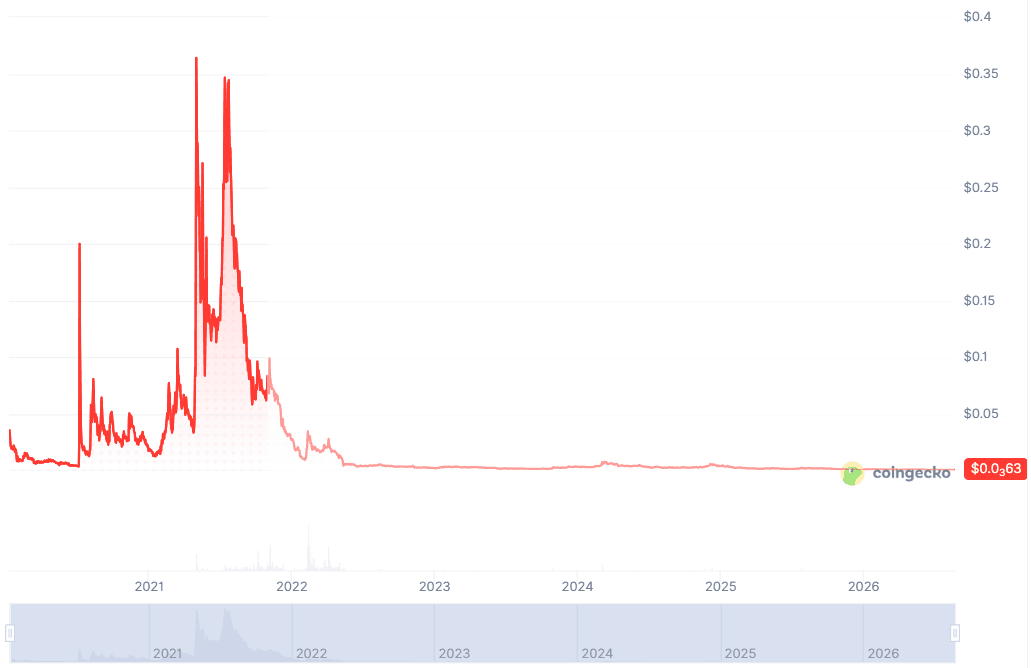
You can read the original article below.
Axie Infinity is the first blockchain game that ordinary people actually played. It is also, as I write this, on its way down. This is my examination of what it did wrong and why — with a summary at the end.
A note on scope
This is about the game itself, not specifically the AXS token. Axie built a growth-dependent economy for the SLP token, but AXS is secure. Since I first drafted this, Axie has launched staking for AXS and is planning a decentralized exchange, so there is real potential in AXS — just not in SLP for the near future. They could fix the SLP economy too, but probably not soon.
What Is Axie Infinity?
Axie Infinity is a Pokémon-inspired 2D game that entered development in early 2018. You attack your opponents in a turn-based system, across two kinds of battle: Arena, where you fight other players, and Adventure, where you fight the computer.
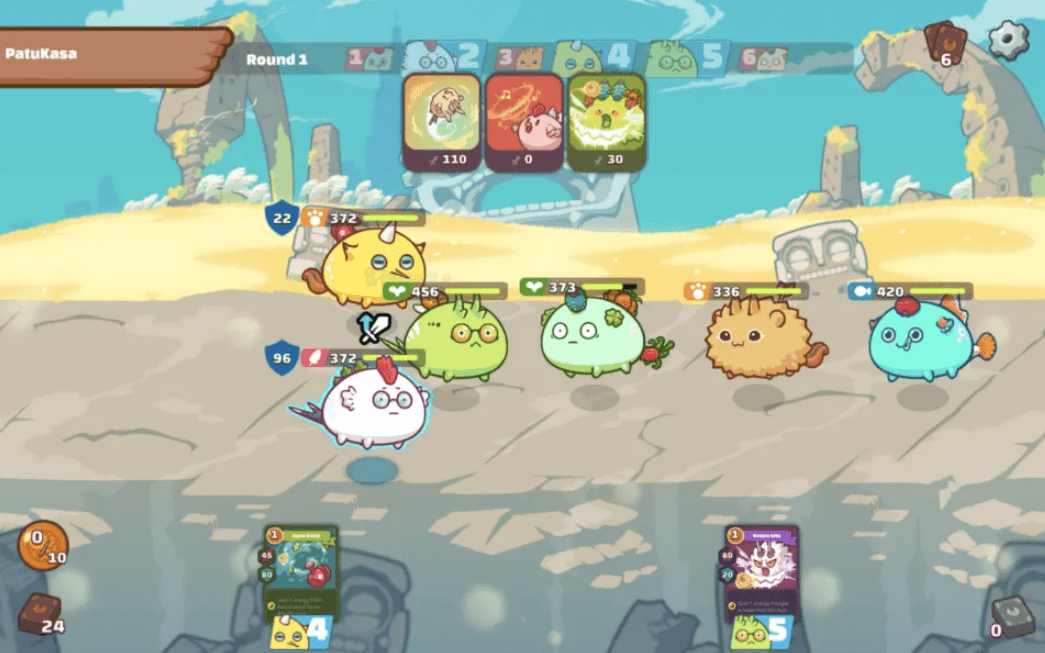
While you play, you earn SLP, a token with real-world value. Some people cover their living costs with it. The average was 150 SLP a day before August 2021, when Axie halved it to preserve the token's value. At 150 SLP a day you earned roughly $1,500 a month (1 SLP = $0.33). At 75 SLP a day, when I wrote this, that was about $180 a month (1 SLP = $0.08).
I call Axie a "normal" game because the playable blockchain games before it were card games, and few people play card games these days. Their purpose was to extract money from the crypto market, not to build something people actually wanted.
Why AXS Has Value
Two reasons: network effect and use case.
People make AXS valuable by believing it will be valuable. As with any crypto or stock market, optimism does a lot of the work.

The second and more real reason is its use case. You need AXS to breed your Axies into new ones. That single need pushed the price up even while the wider market trended down.
So why breed at all? Three reasons:
- Resale. Newcomers buy Axies from the marketplace to start playing. As they buy, prices rise, and you can make good money breeding and selling.
- In-game bonuses. Holding a certain number of Axies gives you more energy, so you can play more and earn more SLP.
- Scholarships. You lend your Axies to someone else and split their profit. There are entire guilds built around this.
How Axie's Economy Works
The economy is the one genuinely bad thing about the project. It collapses the moment the flow of newcomers slows. It is, in effect, a Ponzi-like scheme.
Newcomers buy Axies with Ethereum — itself a problem, which I will come back to — and prices rise. Holders with money then breed their Axies, burning SLP and AXS in the process. That burn is the only thing pushing SLP and AXS prices up. Meanwhile every player mints new SLP simply by playing, which pushes the price back down.
Axie's own site says AXS will have a use case in governance and as a marketplace currency. So far there has been no progress. Most users never touch AXS at all; they earn SLP and sell it.
Why Axie Infinity Is Dying
There is a balance to be struck between minting and burning to keep SLP stable, and Axie never established it.
Every player mints at least 75 SLP a day — formerly 150 — whether or not there are newcomers to absorb it. Growth has a ceiling. Even if the whole world gradually took up Axie Infinity, the system still reaches a dead end.
Sadly, that end is close. Axie has more than 1.5 million daily active users and growth appears to have stalled. The only way to play is to download a desktop app or an Android APK, which people distrust, and that caps how far it can spread. SLP has fallen as low as 8 cents, which is making players quit — myself included. Some are selling their Axies for half of what they paid, for lack of demand.
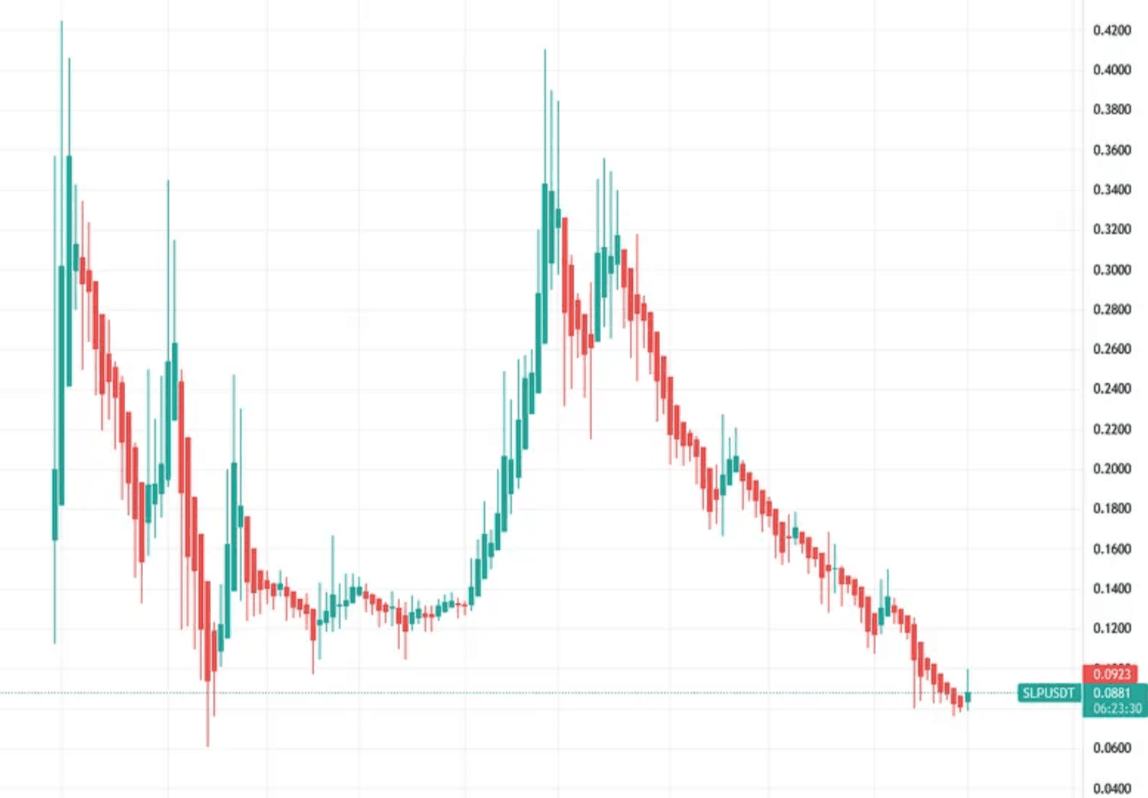
Every uptrend in the SLP chart is a moment when Axie found new players. That is the whole story of the token.
The Downsides of Playing
- Fixed income. No matter how much you play, there is a ceiling on what you can earn. If the game were fun, this would still be demoralizing.
- Daily tasks. It is already hard to play a game purely for money. Putting a daily-task barrier in front of the money makes it worse.
- Lack of trust. The game is not on a trusted platform like the Play Store, so I had to find a spare device to run it on.
- The cost of collecting your income. I earned 1,473 SLP over roughly a month, worth about $130. I could not get it out: transfer fees were above $500 during the NFT rush. I waited two weeks and paid $60. Nearly half a month's earnings went to fees — two weeks of playing for myself, two weeks for Ethereum miners.
- Connection problems. Frequent, and probably down to the Ronin network.
Lessons to Learn
Value creation and economy
The token people earn needs a strong basis for its value. Any project whose valuation comes from growth eventually dies. The valuation you want comes from people who enjoy playing.
In an ideal metaverse there are as many use cases for the native currency as possible, so its value is both high and healthy. AXS has one — breeding — and it is a small part of the game. Most players never breed at all.
Use cases Axie could have had:
- Governance (promised, never implemented)
- Staking (added in October 2021, after I first wrote this)
- In-game items: accessories, boosters and the like
- Betting on other players' matches
Infrastructure
Ethereum is the best network on the market, but it has scaling problems. Games on Ethereum cannot succeed at those fees and speeds, so they have to use something else — as Axie did.
Where Axie went wrong was building its own network, Ronin. Ronin is good enough in itself, but it has no bridge to exchanges or to other low-fee networks like Solana and Polygon. You can play on it, but you suffer badly on fees when you withdraw. In fairness, when Axie built Ronin there was no strong alternative, so it was the right call at the time.
Second, you cannot build a game that depends on players downloading APK files by hand. Games belong on the major platforms: Google Play, Steam, the App Store.
Conclusion
Blockchain gaming is new, and it is normal for early projects to be imperfect. Better ones are coming. But one thing is already clear: this is going to change a great many things, and not only in gaming.
Why Axie is dying, in short:
- The major reason: an unsustainable economy that collapses when growth slows.
- A minor reason: they built their own network instead of joining a strong one.
- A minor reason: the game is not available on the major stores.
Related Posts
What Was Decentraland's Biggest Mistake?
Decentraland is one of the earliest and best ideas in blockchain gaming, and it is nearly empty. The reason is a decision made long before anyone logged in.
The Security of Avalanche Subnets
Do subnets inherit Avalanche's security, or are they centralized and unsafe? Both claims circulate, both are half true, and the answer took real digging to find.