





What Was Decentraland's Biggest Mistake?
Decentraland is one of the earliest and best ideas in blockchain gaming, and it is nearly empty. The reason is a decision made long before anyone logged in.
Decentraland is one of the earliest and most impressive blockchain-based game projects. It has also fallen behind newer ones like Axie Infinity and Star Atlas.
Why? Is the idea bad? Is the game bad? Neither. Let's dig in.
What Is Decentraland?
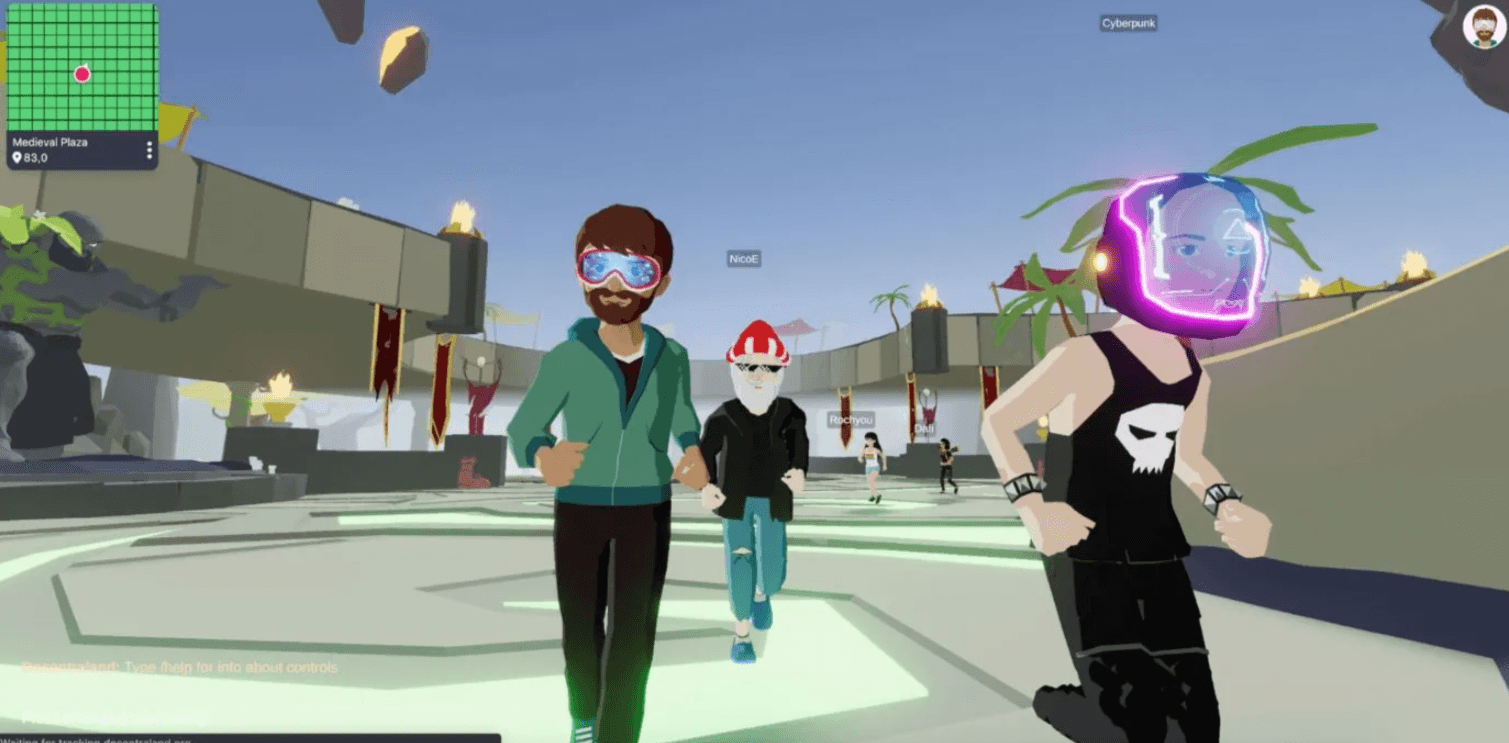
Decentraland is a 3D open world that runs in a web browser, and the idea behind it is superb. It is a nearly empty world in which players buy land and build whatever they like on it. There is a builder tool for straightforward things and an SDK for anything more advanced.
It is governed by a DAO, which means anyone can take part in shaping its future. According to their latest report at the time of writing, there are about 30 active voters.
How Big Is Decentraland?
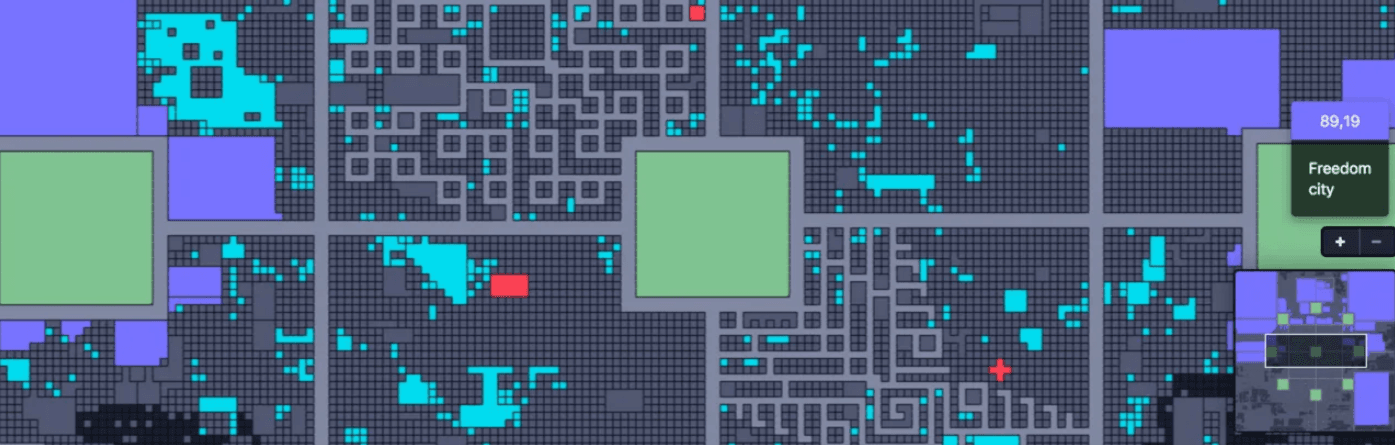
A parcel is 16×16 metres and there are 90,000 of them, which makes Decentraland a world of 23 million square metres. That is nine times the size of Luxembourg, and twice the size of Cyprus or Lebanon.
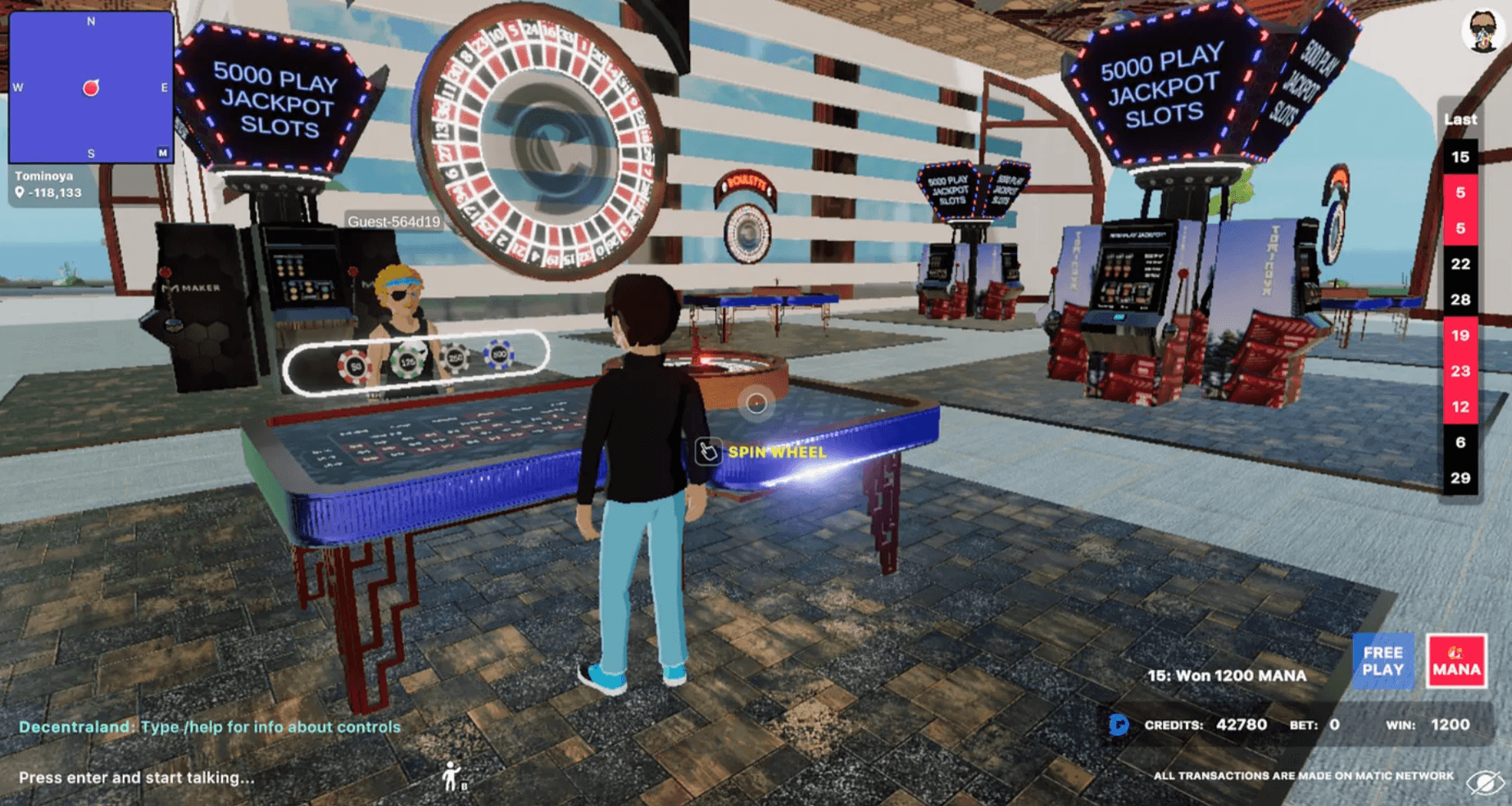
Plenty has been built there: casinos, go-kart tracks, game centres, karaoke bars, art galleries. The sky is the limit. You can build whatever you want, make it interactive, and set rules for who may see or enter it.
A Short History
The project entered development in 2015, built by Ari Meilich and Esteban Ordano, and released its first beta in 2017. The first land sold in December 2017 at $20 a parcel. As of September 2021, prices start around $4,000 and depend heavily on location — some parcels are listed at $200,000.
The Big Players
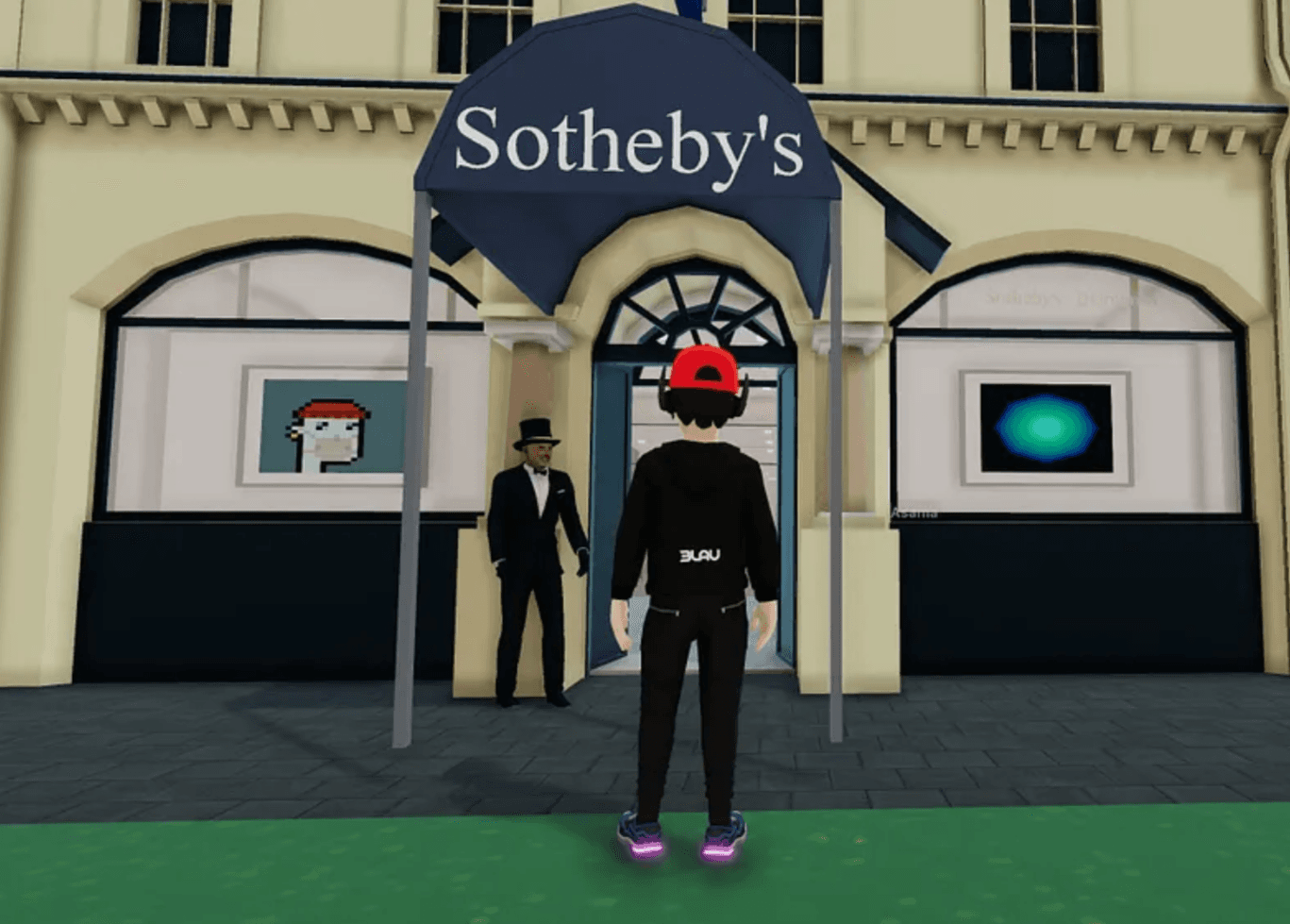
Real-world names have moved in. In June 2021 the London auction house Sotheby's built a digital replica of its New Bond Street headquarters as a virtual gallery for digital art. On 18 June 2021, the New York digital real-estate vehicle Republic Realm paid the equivalent of $913,228 for 259 parcels, which it planned to turn into a virtual shopping district called Metajuku, styled after Tokyo's Harajuku.
The Biggest Problem
Everything so far sounds excellent. The idea is fascinating; the execution is not.
Decentraland is larger than fifty countries, whose combined population is over 60 million. Yet fewer than 100 people are actively playing or living in it, and the result is a desert.
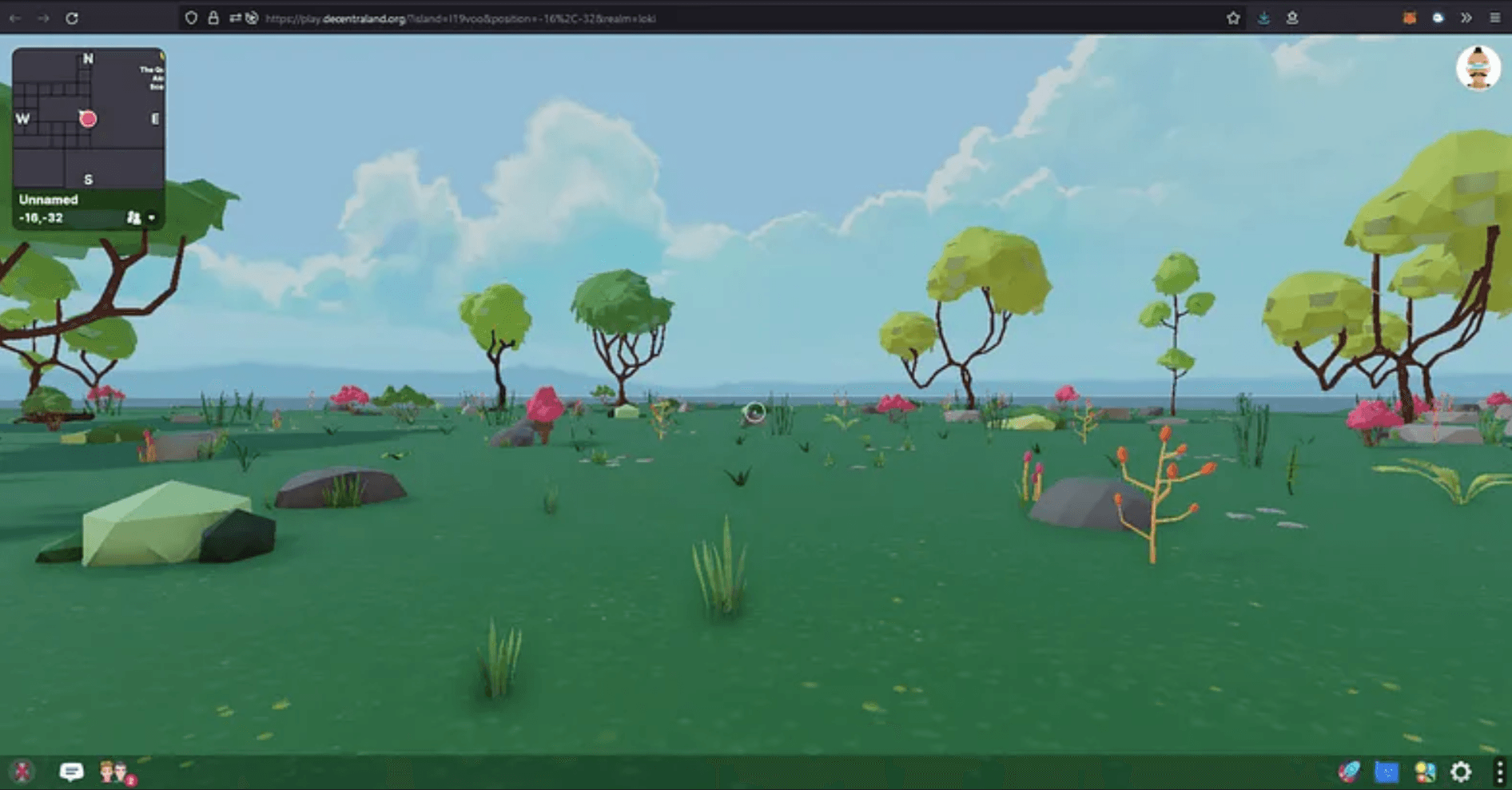
The vast majority of the world looks like nothing at all.
An empty world would be forgivable on its own. The problem is what emptiness does to the experience. Every time you want to go somewhere worth seeing, you have to "jump" there — and the scene takes more than a minute to load for me. I have a 90+ Mbps connection, an RTX 3060 and an 11th-generation Intel i7-11800H. This is not a slow machine.
Nobody plays a game that makes them wait a minute every time they move. That is the biggest mistake Decentraland made, and I feel sorry about it, because underneath it is a genuinely good game. A true metaverse.
The Infrastructure Problem
There are two parts to this.
The blockchain. Decentraland is an old project, so building on Ethereum was the normal choice. But Ethereum fees have run above $500, and on an ordinary day they are $40–50. Nobody wants to pay a $50 fee for a $5 item.
The browser. Decentraland is a browser game, which is why loading takes so long, and why performance stays poor even on strong hardware. Other games are built for the PC in engines like Unity and Unreal.
Lessons to Learn
The lessons here are simple:
- Sell land gradually, as the existing land fills up, and do not let parcels sit abandoned for long.
- Build on an efficient blockchain, or migrate to one when you get the chance.
- Build on a strong game engine and make it work for everyone without performance problems — or migrate when you can.
Conclusion
I love builder games like Decentraland, and the idea of a decentralized game world is genuinely exciting. But with these problems, it cannot be played.
Decentraland should have the means to migrate to something like Polygon or Solana, and to rebuild on a powerful game engine. That alone would solve the performance problem. If jumping somewhere took under five seconds, people would play.
And even with the performance problems, if Decentraland had not sold all its land so quickly — if it had released parcels gradually as the world filled — people would want to be there. I would have wanted to spend time there. I would have wanted to live there, and to buy a plot and build the place I cannot build in the real world.
I hope this was useful. Building better metaverses is going to take a collective effort; we cannot leave it to individuals or companies. Cheers!
Related Posts
Why Axie Infinity Is Dying, and What We Can Learn From It
Axie Infinity built the first blockchain game people actually wanted to play, then tied its economy to growth that could not last. A look at what went wrong.
The Security of Avalanche Subnets
Do subnets inherit Avalanche's security, or are they centralized and unsafe? Both claims circulate, both are half true, and the answer took real digging to find.