





The Security of Avalanche Subnets
Do subnets inherit Avalanche's security, or are they centralized and unsafe? Both claims circulate, both are half true, and the answer took real digging to find.
There are a lot of misunderstandings in the crypto ecosystem, and this is one of them. Everyone runs counter-propaganda against their competitors, and I am not sure how much of it is deliberate. What I do is dig into the things that matter and find out what is actually true. It is a serious mistake that officials do not act against this.
Anyway. The reason I am writing this is that the answer was hard to find, so I decided to spread it further.
I kept running into two opposite claims: "Subnets inherit the security of Avalanche's primary network" and "Subnets are centralized and not safe." As you might guess, each is partly right and partly wrong.
"Subnets inherit the security of the primary network"
Yes — validators can validate subnets, and a subnet can inherit the primary network's security. But will they? That depends on the subnet. If it offers enough reward, validators may choose to validate it too. It is not a property every subnet automatically has.
There can be countless subnets, and validators cannot cover all of them even when it is profitable. So a subnet can attract validators and gain the primary network's security, but only partly, and only if it pays for it. It is like buying a Volvo for safer rides: if I can afford it, I can have it. Can I? We'll see.
"Subnets are centralized and not safe"
Also yes — if the subnet cannot attract enough validators. But a subnet that offers enough reward to bring in more than 20 validators can reasonably be called decentralized and safe. Where exactly you draw that line is up to you.
Consider the comparisons. Polygon has a 5-of-8 multisig, meaning eight accounts hold severe control over the network — and we call it decentralized. Binance Smart Chain has 21 validators, and we call that decentralized too. Solana and Avalanche both have over a thousand validators, which is more than enough to be highly decentralized.
How Many Validators Is Enough?
My rough ladder:
- After 8 validators, you are better than Polygon.
- After 21, you are better than BSC.
- After 50, I am willing to call you decentralized enough, for now.
An Ideal Subnet Strategy
Opening a subnet costs 3 AVAX — around $250 — but you need at least one validator to run it, and one validator makes you 100% centralized. If you cannot start out more decentralized than Polygon, you are better off not starting.
My view: as a new project, launch on the primary chain and grow there. Once you are mature enough to fund validators, start your subnet with at least 11 of them.
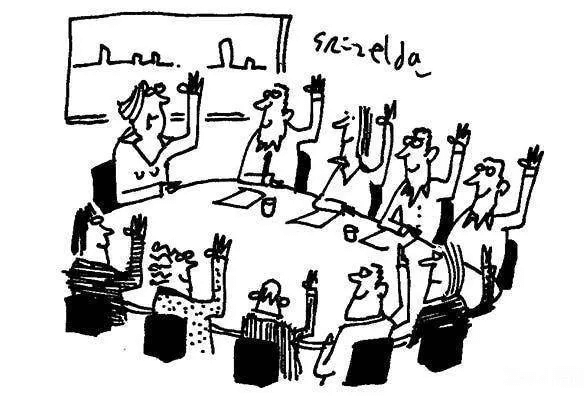
You will still be partly centralized, but definitively better than Polygon — and not only because 11 beats 8. Any validator can join your subnet without your permission. That is a big deal.
A project the size of Axie Infinity could start with more than 50. Axie runs its own chain, Ronin, which has nine active validators, four of them the company itself. They could move the entire chain into a subnet and end up with five to ten times the validators they have now.
Do Your Own Research
I hope this helped. These answers were hard to find. Do not take my word for it — if it matters to you, research it yourself. That is how I learned Solana is decentralized, after people had convinced me it was not. Not fair.
The world is not binary, it is complex. Everything has its own trade-offs, and finding out what they are means a lot of reading. Misinformation travels faster than the truth.
Keep safe, keep smart, keep simple. And enjoy your life. Bye!
Related Posts
What Was Decentraland's Biggest Mistake?
Decentraland is one of the earliest and best ideas in blockchain gaming, and it is nearly empty. The reason is a decision made long before anyone logged in.
Why Axie Infinity Is Dying, and What We Can Learn From It
Axie Infinity built the first blockchain game people actually wanted to play, then tied its economy to growth that could not last. A look at what went wrong.